


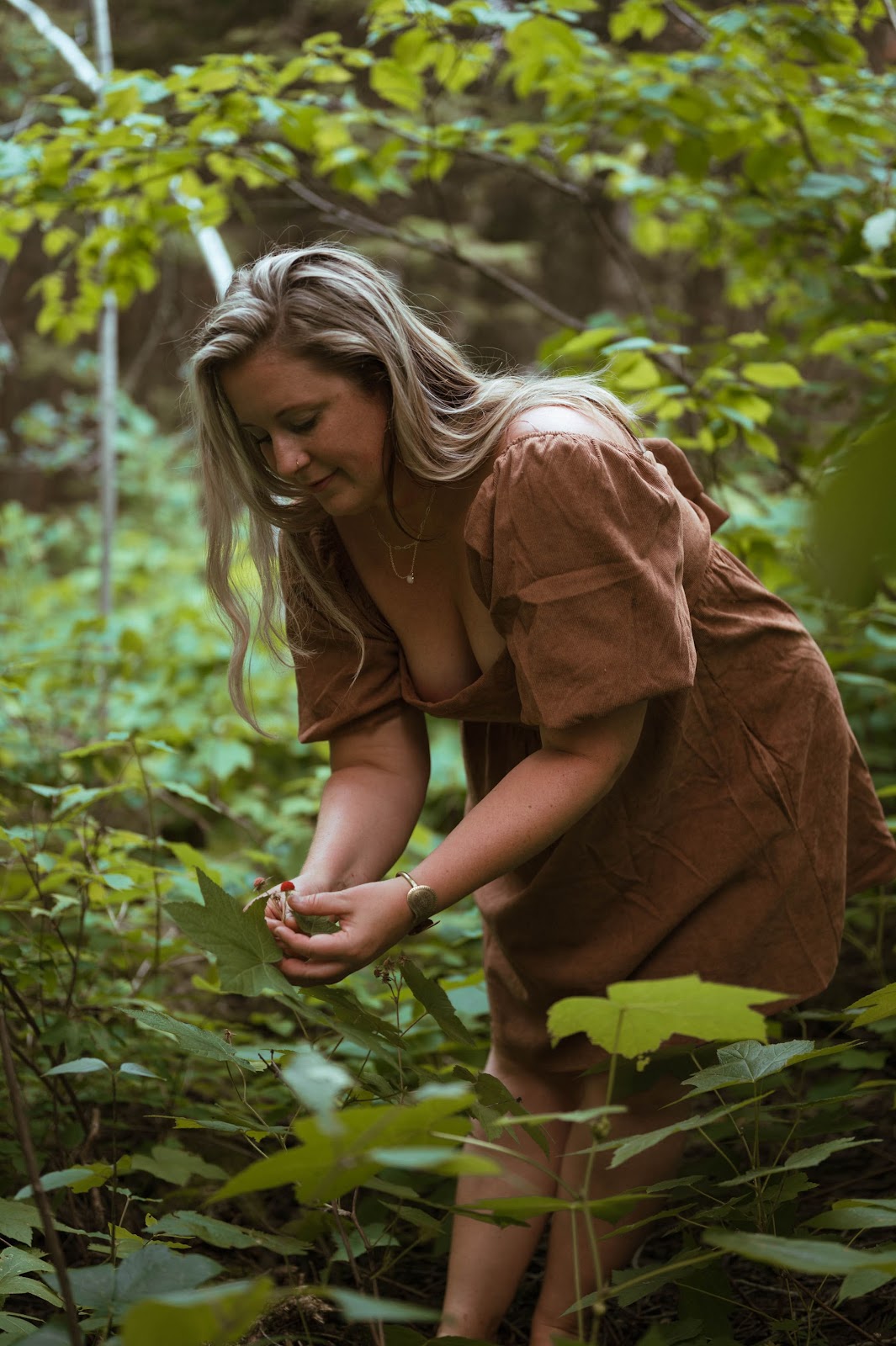
I just turned 43. I am currently writing a brand-new workshop about embodying the matriarch archetype. I do not think I am old enough to qualify for elderhood yet — though in many societies, elderhood starts in our 40s, so maybe I am. I strive to embody a matriarch one day, and in doing so, I sometimes embody a matriarch now.
It may seem strange that a woman who isn’t even in her mid-40s yet would be pondering over embodying a matriarch. Realistically, I have at least 20 to 25 years before I believe I would be considered an “elder”. Why matriarchy and elderhood now? Because two years ago, my local community underwent a traumatic split that is no closer to repair now than it was then.
Before that split, I would’ve insisted that our community would be able to go through something like what transpired and make it to the other side. I thought we had real elders — actual older men and women who would be capable of holding the relational field patiently and tenderly enough and with enough boundaries that our community would be held in its process. I feel stupidly naive for believing that. Our community has older people who are wise and who’ve been here a long time, but it seems they are just as conflict-avoidant — or perhaps just as clueless and afraid — as the rest of us.
The most heartbreaking piece of what happened in my community wasn’t the split itself, though that was an emotionally grueling shit show. The truth is, relational rupture and splits happen all the time. Communities split. Churches go through splits. Marriages split. Friend groups split. Organizations split. Boards of directors split. Humans have always and will always have conflict. Maybe we’ll always struggle with it, too.
The most heartbreaking piece was and still is the absence of anyone capable of holding the conflict. There’s been no one to contain the mess and steward a repair process. I am deeply saddened over the absence of literally anyone in my community, including myself, standing up and saying, “This matters too much to leave it unattended.” Because that’s what elders have historically done — they stand up when no one else does and insist that the continuity of relationships is the most important thing.
It seems I naively thought the old people of my community would do that. Not because they could or should magically fix everything or because they have all the answers. I just thought elders understood that unattended fractures are always inherited by the next generation. That if a wound isn’t tended, it doesn’t disappear; it just moves underground into silence, resentment, and eventually, withdrawal from the community itself, which is literally what has happened.
When we moved to this little village 11 years ago, I quickly learned that it was unlike any place I’d ever lived in or heard of before. I learned the art of bartering and trading here, the tradition of work parties, and the practice of actual relational reciprocity beyond friendship. Somehow, I moved to a place with the oldest still-operating cooperative in the state and a place that started its own local food system without any government oversight, which I find insanely cool.
If I romanticized the role of the elders here it was because everything else about this place was so unusually refreshing, wholesome, and relational that it made me believe we actually could create the more beautiful world our hearts know is possible together, here in our remote little village. Turns out, being a community who creates great projects like its own wild rice-processing facility, farmers market currency, and local food chain isn’t the same thing as being a community who knows how to show up patiently, honestly, and authentically to repair with each other.
During the summer of 2024, our community was tested, and I did not see the capacities for relational continuity I thought were there. I am angry about that.
My anger also carries a big dose of sadness. I thought we had elders. And when we needed them, they weren’t here. It’s a different grief than the grief of the original event. The split itself was rough, but it doesn’t compare to the grief of discovering that the people I thought were holding the village weren’t actually holding the village. I was also someone who thought she was holding the village — until this huge thing happened and I quickly discovered that I did not have the wisdom to know what that actually meant during a community-wide split or the capacity to see a long repair process through to the end.
I assumed this village had a wise bunch of elders who would though. Surely, somebody will step forward and interrupt the destruction. Someone sees the big picture here, right? Somebody’s protecting the integrity of the village, right?
Until a crisis came along. Crises have a way of revealing what’s always been true. In our crisis, the elders didn’t elder. The leaders didn’t lead. The adults didn’t adult. I learned that people in authority don’t always possess capacity, and that has forever changed my feelings about my precious community and about leadership in general.
Even the men sitting on our township’s board of supervisors, who are all over the age of 60, did not truly embody elders during this time. I sat in a township meeting where they allowed an actual witch hunt to take place that had nothing to do with township business. They couldn’t even hold the boundaries of their own meeting — and the meeting minutes prove it. I respect these men, and I lost some respect for them that day. They had authority, but authority isn’t the same as elderhood.
This may be one of the hardest, most important lessons I’ve learned in the last two years. Modern culture confuses authority with eldership all the time. We assume older people and people in leadership and clergy and experts are elders — that anyone who has accumulated enough years, credentials, expertise, or influence must be capable of holding big, complex, confusing things. Those assumptions are often wrong. Mine were.
Elderhood is not a title, a profession, or a position. It is a capacity. An elder is someone who can remain devoted to the wellbeing of the whole when everyone else becomes consumed by individual stories. At least, that’s what my understanding of an elder is.
Still, elders can also be petty, short-sighted, cowardly, biased, and political. Some elders have perpetuated harm. Some have enabled it.
In the immediate weeks following the crisis, I, along with several women who’ve done a significant amount of personal work and trauma integration, gathered in my living room to see if we could bring our skills together to facilitate some sort of repair. Despite all our training and experience in Emotion-Focused work, Non-Violent Communication, somatic work, repair facilitation, circle facilitation, and more, we quickly realized that, even as a group, we didn’t have the capacity to play that role.
Looking back, I think what we all realized without saying it was, even with our powers combined, we were not elders. We were between the ages of 28 and 45 at that time. Sure, we had skills, but not the capacity or wisdom required to hold an entire relational field with the patience and maturity only elders can have. Skill and eldership certainly overlap, but they are not the same thing.
You can be highly skilled at therapeutic work and relational skills and still not have the capacity of an elder. A therapist or coach is responsible for holding a person or a relationship. Elders are responsible for holding an entire relational ecosystem — and even they aren’t supposed to do it alone.
In our community, I have noticed people (myself included) focusing on individuals in the crisis — the man who was arrested, the kids who were with him, the non-profit director who got fired, the youth program employees who left, the newspaper reporters who wrote biased articles, the board of directors who all quit at the same time, the sheriff’s deputy who overstepped. None of those are invalid to focus on. However, if we stay focused on these individuals or particular events, we’ll continue to stay disconnected and lost as a community.
I’d like to think that, had I been an elder and matriarch in my community when all this went down, I would’ve had some sense of what to do. Maybe not all the answers because no one person is responsible for that, but I’d like to imagine my current friends and I, in 20 years, with our grey hair and wrinkles, would step up and be able to say, “We know how to hold and guide our village through the inevitable splits that happen and this is one of those times. Trust us. We’ve got this because we watched our elders do it too.”
Perhaps I’m still idealizing, but I aspire to become a matriarch who can hold individual stories and pain while still keeping my focus on the larger impact of a community crisis like this. I’ve watched this crisis continue to ripple out and affect families, friendships, and even children’s friendships because their parents can’t seem to figure out how to set their egos aside and talk like adults. But, the effects are happening on an even larger scale that no one seems to be talking about: the unspoken tension and power dynamics present at literally every farmers market and potluck, the practical realities of moving in a community that won’t address its own split, and most of all, what this unresolved crisis means for the future of our beloved village.
I believe these women and I had the best of intentions and even showed elderlike maturity by recognizing that facilitation of repair at this level exceeded all of our capacities combined. A lot of people, including myself at an earlier age, would’ve rushed in and tried to fix things, possibly causing more damage. I see us growing into matriarchs and elders, but we are not there yet — nor are we supposed to be.
In fact, there’s another layer of grief about not having elders to help us navigate this crisis. In 20 or 30 years, when I’m 60 to 70 years old, it’s possible that another community breakdown might happen. I’ll be a crone and elder by then. But because no elders stepped up during this crisis, I and the adults my age have no example to follow when it’s our turn. As of right now, we don’t have the memory of, “I remember when a similar split happened 30 years ago. Here’s what our elders did then. We know what to do now” — even though this is exactly how middle-aged adults traditionally grew into elderhood.
This hurts a lot. We didn’t just lose the possibility of repair (though I’m still hopeful). We lost the opportunity to witness elderhood in action, to learn what accountability looks like at the community level, and to see how older, wiser people navigate impossible situations. We lost the chance to see a living example. And because of that, I find myself with the impossible task of trying to imagine elderhood without ever witnessing it in action when it mattered most. That feels like being asked to become something you’ve never seen or learned how to become.
Not only does it feel like my community will never be what it once was, it also seems like my generation in this village is missing out on some serious learning and witnessing because of the absence of elders and matriarchs.
The 2024 crisis and its ongoing unfolding is one of the main reasons why I’m writing a workshop called Embodying the Matriarch. Matriarchal cultures often placed enormous emphasis on maintaining social continuity. Elders and matriarchs aren’t just old people in rocking chairs doling out sage advice. They’re also people who protect the integrity of the village by noticing fractures early, intervening before resentment calcifies, facilitating accountability, preserving connection wherever possible, and remembering that the children are always watching.
My longing for matriarchy has grown after two years of witnessing what happens when there are no matriarchs and elders. Because I’ve heard the history of my community, I know that there really were men and women in previous generations who took their role as elders and matriarchs seriously. In this crisis, however, no one of any age has stepped into the role of elder or matriarch. The hole is huge, and we can feel it viscerally even if we don’t all use the language of missing elders to describe it.
I have experienced firsthand what happens when a community goes through a rupture without anyone capable of holding a repair process. And now, as a new 43-year-old, I find myself with a knot in my throat as I ask, “Who becomes those people? How does that happen? Where do elders come from? How are they made?”
And perhaps most painfully, “Who is going to initiate me into elderhood if no one is embodying an elder now?”
I don’t think my community is the only community with people quietly, secretly asking that question. The truth is, we’ve collectively dismantled the rites of passage that used to initiate elders and matriarchs for thousands of years.
We celebrate youth and pathologize aging, so we’ve made it unappealing to grow into matriarchs because embodying a matriarch requires killing the part of us who believes our value lies in being perpetual maidens. We prioritize productivity, so our generation of women doesn’t see the value of learning to be unproductive, which is actually a requirement for elderhood.
We segregate generations so much that younger people feel uncomfortable or grossed out by old people so they don’t want to sit at their feet and soak up their wisdom. We institutionalize death and birth, even though for most of humanity’s existence the elder wise women guided the dying one or the one being born and their family members across those thresholds. We professionalize wisdom, when in truth, the last two or three generations are the first in human history to seek out and pay professionals for emotional, relational, and spiritual support.
Is it any wonder why nobody knows how to hold communal grief, anger, witnessing, processing, and repair?
It may sound like I’m blaming the old people. I’m not. I recognize that communities with elders still fracture. The presence of elders isn’t a guarantee against rupture nor a guarantee that rupture will be held with the care it requires. The presence of elders can’t guarantee that other community members will participate. Sometimes, the harm is too great and restoration is impossible. Sometimes, the timing isn’t right.
I don’t place the responsibility of guaranteeing repair on elders, but I do hold them responsible for ensuring that the wound receives attention, that the community remains conscious, and that the conflict doesn’t get passed down to our children because the adults couldn’t get our shit together.
When I am an old, beautifully wrinkled matriarch with gnarled hands and silver hair, I want to be embodied enough and brave enough to stand up in my community during a hard time and ask, “What is the truth of what happened? What responsibility belongs to whom? What is needed now? What is unresolved? What have we learned? How do we move forward without forgetting? How do we tend this with the care it deserves instead of leaving it to our children to fix?”
What happened two summers ago was tragic and won’t be forgotten for years. But, the greater tragedy, I think, is that two years later, that split remains unheld. It’s still alive, still talked about, still shaping behavior and relationships. And until we figure out how to clean up the mess, that split will keep shaping our community’s future without anyone tending it.
And also…
I admit, I might be idealizing elderhood here. I don’t want this piece of writing to turn into something that sounds like, “If only the elders had stepped up, things would be different.” Maybe that’s true. But, maybe not.
The residents of my village don’t have our relational shit together. Distant and awkward relationships and unrepaired ruptures were present in our village long before the summer of 2024. I knew it. Others knew it, too.
2024 sucked, but it revealed deeper, festering wounds that were already there. It’s not as if the community split because the elders failed. Perhaps, more accurately, the split revealed how many fractures already existed, and the absence of elderhood meant no one knew how to hold what surfaced.
I am not standing outside this story. I have my own unresolved conflicts in this community, my own avoided conversations. Repair feels difficult for me, too.
My friend Kelly is a matriarch-in-becoming herself. Before I posted this piece of writing, I sent it to her. She responded with a whole list of questions and a few challenges — which prompted me to go back and weave more complexity and truth into this.
She texted me, “We always have to be prepared for rupture and what systems have we set into place for rupture?”
This is a very matriarchal question. Most communities, organizations, and families prepare for growth and success. They do not prepare for ruptures and failures. I believe elders and matriarchs understand that rupture is inevitable — that it’s not a sign of failure but a sign of real relationship.
I think it’s dumb to try to create environments or communities that are free of conflict. We would be much wiser to expect rupture and make a plan for handling it than to hope it never happens and then get caught with no plan, no tools, and no way forward — the exact situation we’re in now. A matriarch doesn’t create communities that never break. She stewards communities that know how to repair.
In sitting down to write a workshop on matriarchal embodiment, I recognized that I’ve been unconsciously studying the absence of eldership and the absence of the conditions that create elders for two years. Not theoretically. Practically.
I live inside an actual village where it seems nobody remembers how to keep the village in integrity and nobody initiates or facilitates repair. Where friends and neighbors won’t talk to each other, despite growing up together. I’m still witnessing authority that exists without stewardship during a conflict that has seemingly been given over to time alone to solve.
Time is a terrible healer of communal wounds. It usually teaches people to live around the wound instead.
And yet, time is a key ingredient in becoming a matriarch. Perhaps that is the paradox.
Maybe I’ll never get elder training from the generation before me. Maybe this is what every post-modern generation starts to ask in their late 30s and beyond: Where have all the elders gone? And, if they aren’t coming, how do we learn to become them?
I don’t know exactly how elders are made in the 21st century when rites of passage and initiations have basically disappeared from modern life. Historically, existing elders taught and initiated the next generation. That no longer seems to be the case — or at least I’m feeling sad and jaded enough that I can’t see the possibility.
What happens when the chain breaks? When we no longer have grandparents who know how to elder? Many of us don’t belong to intact villages or traditions. We don’t go through rites of passage. Many of us don’t even have living lineages. I don’t know who initiates us when there’s no one left to do the initiating.
Unless life itself is the initiator. Heartbreak and failure become our initiators. Disillusionment initiates. Grief initiates. And for my community in particular, maybe the village wound will initiate us, me into elderhood.
Maybe the question is no longer, “Where were the elders?”
Maybe elderhood begins by asking different questions, like: What does a community lose when nobody knows how to hold its rupture? And, what conditions create or fail to create elderhood?
Maybe my initiation into embodying elderhood is through witnessing the cost of what happens when the whole village has forgotten why we need elders in the first place.
Despite everything I’ve written here, I, a hopeful and sparkly Gemini, believe repair is possible — and believe me, I am definitely touching on some hopelessness in myself through writing this. My friends and I still talk about the possibility of community repair, of stepping up and trying to facilitate a conversation or a grief ritual, of tending to the knots and tears in our village web.
People have found their way back to each other before. Villages have survived fractures before. I wouldn’t be studying matriarchy if I had given up on my village.
Perhaps, what is required to embody a matriarch and elder is not only witnessing the wound and being brave enough to name it out loud, but also in refusing to give up on the possibility that it can one day be tended.
Big love,
LL
